
Dear people of Saint Peter’s.
This edition of The Key supplements our spring issue, which is dedicated to our migrant ministry. Explore the history of this deeply rooted work online at saint peters.org/thekey.
We are excited to announce a new partnership with the City of New York for our weekly Compass Program clinic. A $170,000 contract builds a sound foundation on which we hope to expand volunteer legal consultations. It also allows us to place a paid coordinator at Federal Plaza for immigration court-related matters and to help with detentions.
On October 14, the NYC Forum on Faith will feature a panel exploring the ways in which ministry with migrants strengthens communities of faith and brings people of different faiths together. I will moderate this panel composed of some of the most effective faith-based migrant ministries, including our own. More information and registration at forumonfaith.org.
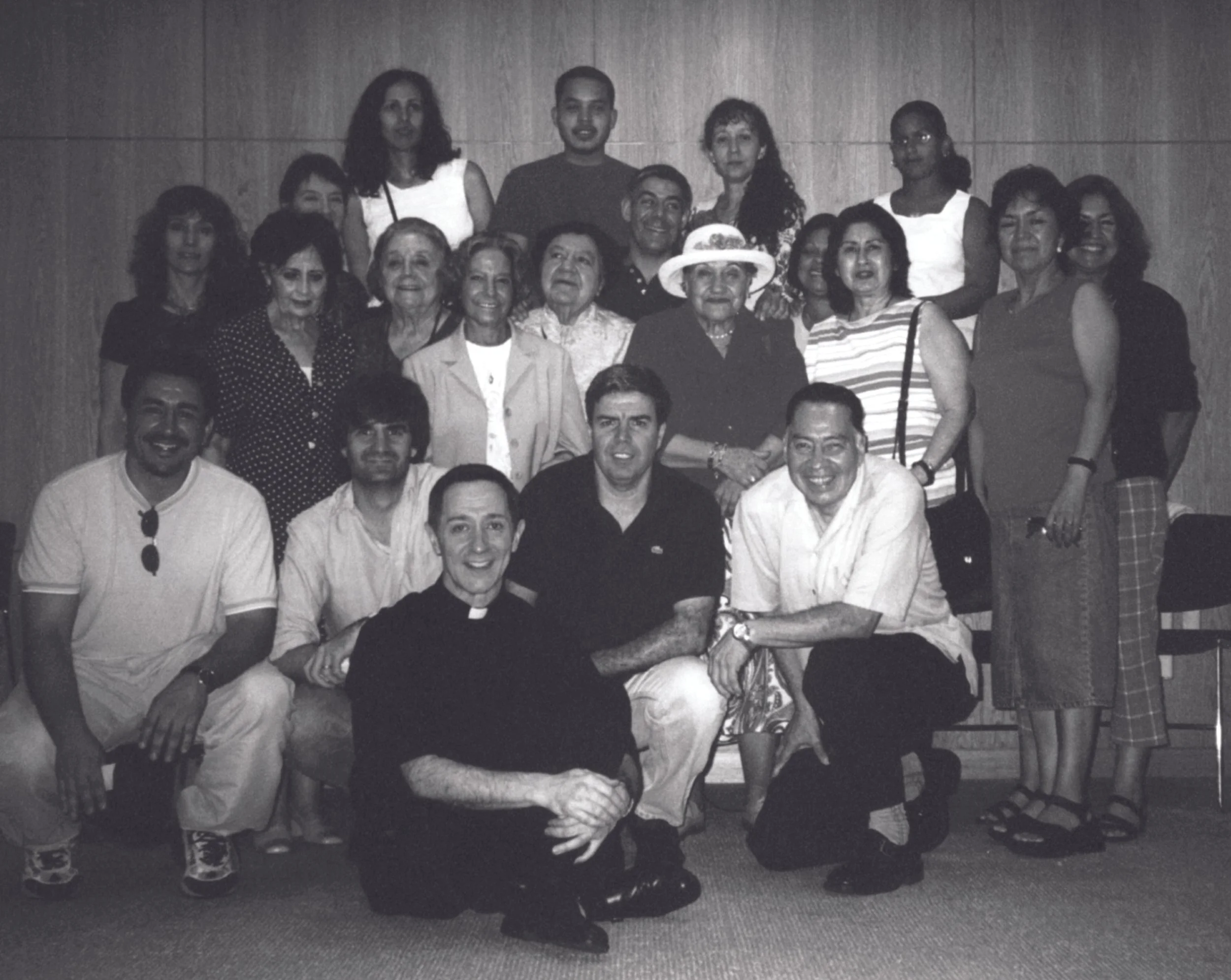
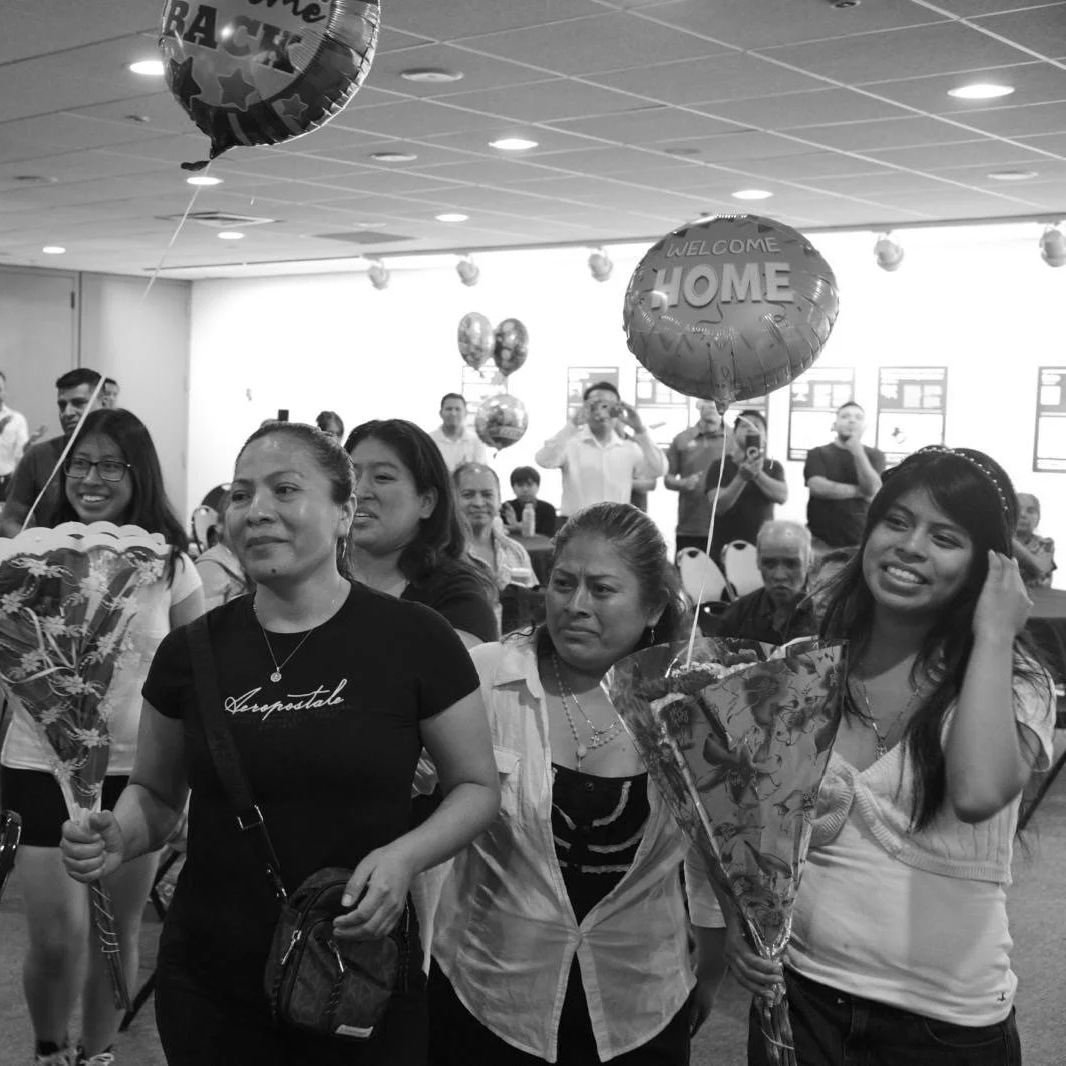
Photos to the left are from our recent family reunification. Sponsored by Saint Peter’s and made possible through the support of members of Congress, 15 families were able to travel to the U.S. via humanitarian visas. For many, this was the first time they had seen their loved ones in person in more than ten years.

Jared R. Stahler
Senior Pastor
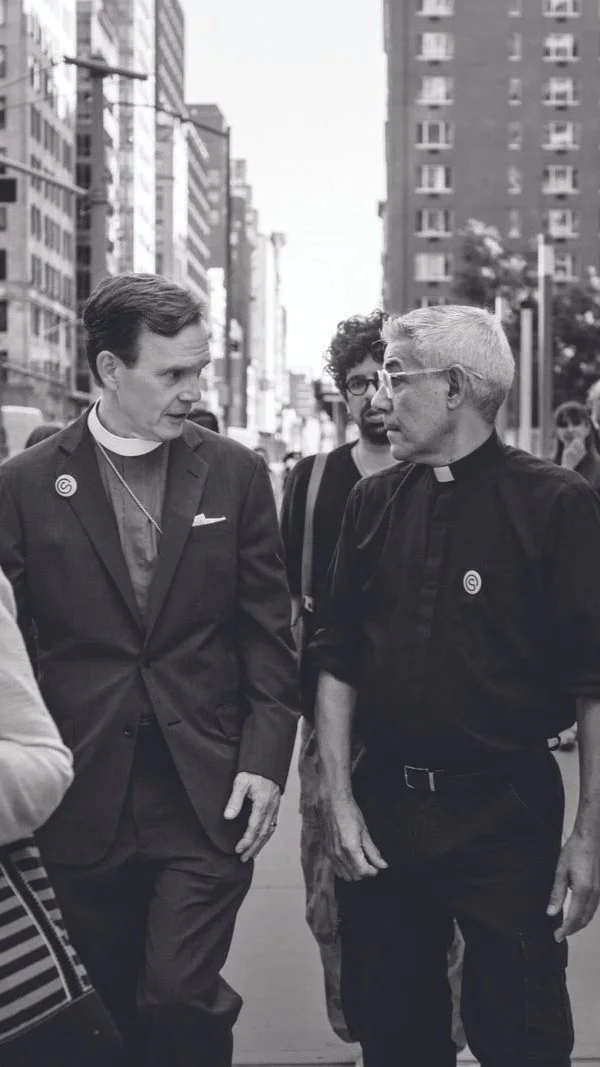
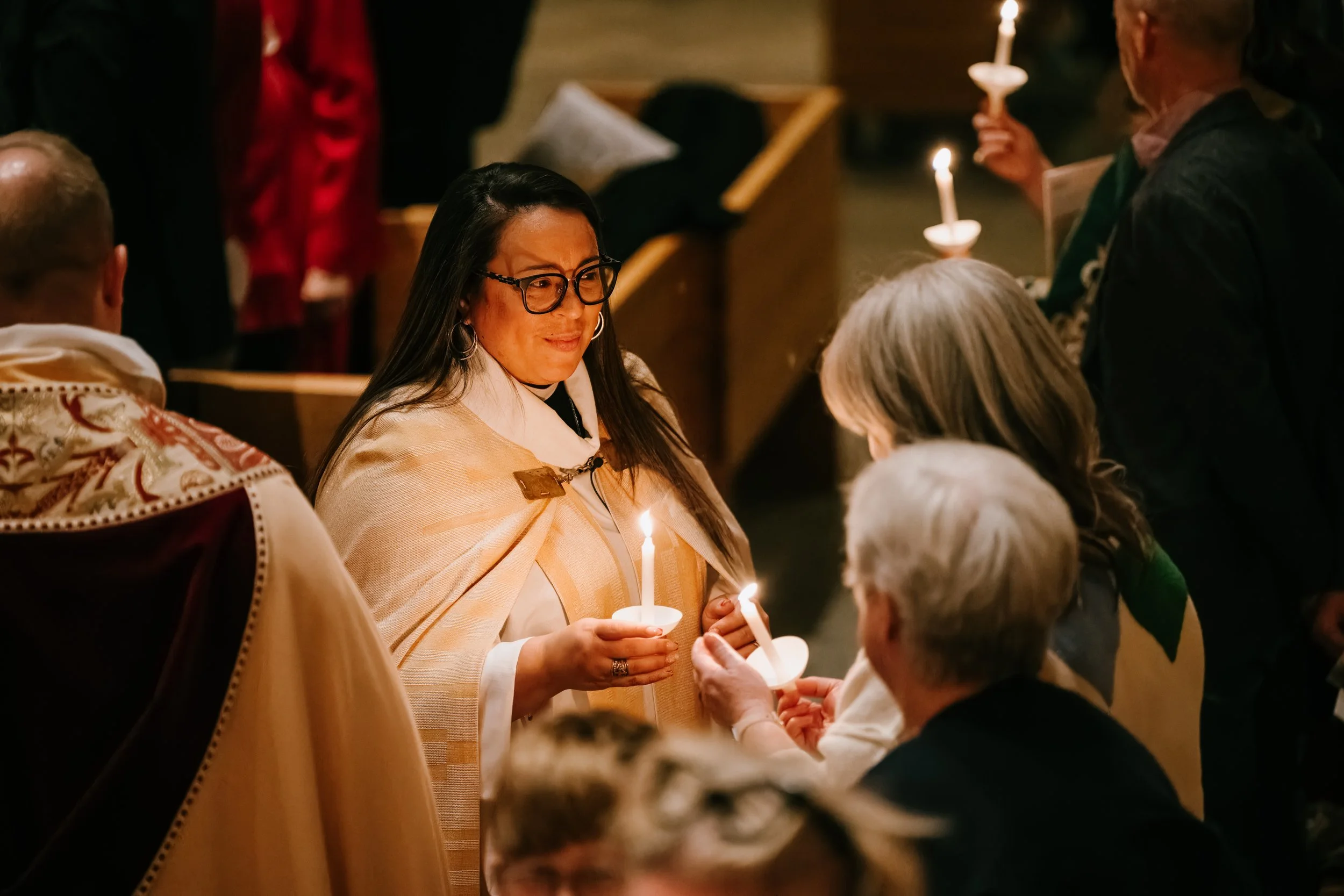
Pastor Fabián Arias with Bishop Matthew Heyd, Episcopal Diocese of New York (Nicoló Filippo Rosso)
Dear people of Saint Peter’s.
To be holy and right and just, God’s people are commanded: “When an alien resides with you in your land, you shall not oppress the alien. The alien who resides with you shall be to you as the native-born among you; you shall love the alien as yourself, for you were aliens in the land of Egypt: I am the Lord your God” (Leviticus 19:33-34). This command is a section of the “Holiness Code.” The purpose of keeping the commands of the Code is to distinguish God’s people Israel from other nations — God holding God’s people to, and God’s people fulfilling, a higher standard. It is formulated both as a reminder of enslavement in Egypt and as a reminder that any way of treating another which is harsh or exploitative is not merely prohibited, but is not fruitful for society.
From the founding of Saint Peter’s International Ministry in 1996 with its focus on accompanying migrants to the expansive advocacy efforts of today, we see the wisdom of the Scriptures bearing out in our own time. This issue of The Key explores Saint Peter’s response to “the alien in the land” over the course of the past 30 years. In an increasingly oppressive society, we seek to continue to embody Scripture’s path of life. Why? Because not only is the humanity of others defined by it, but our own humanity, too.
Jared R. Stahler
Senior Pastor

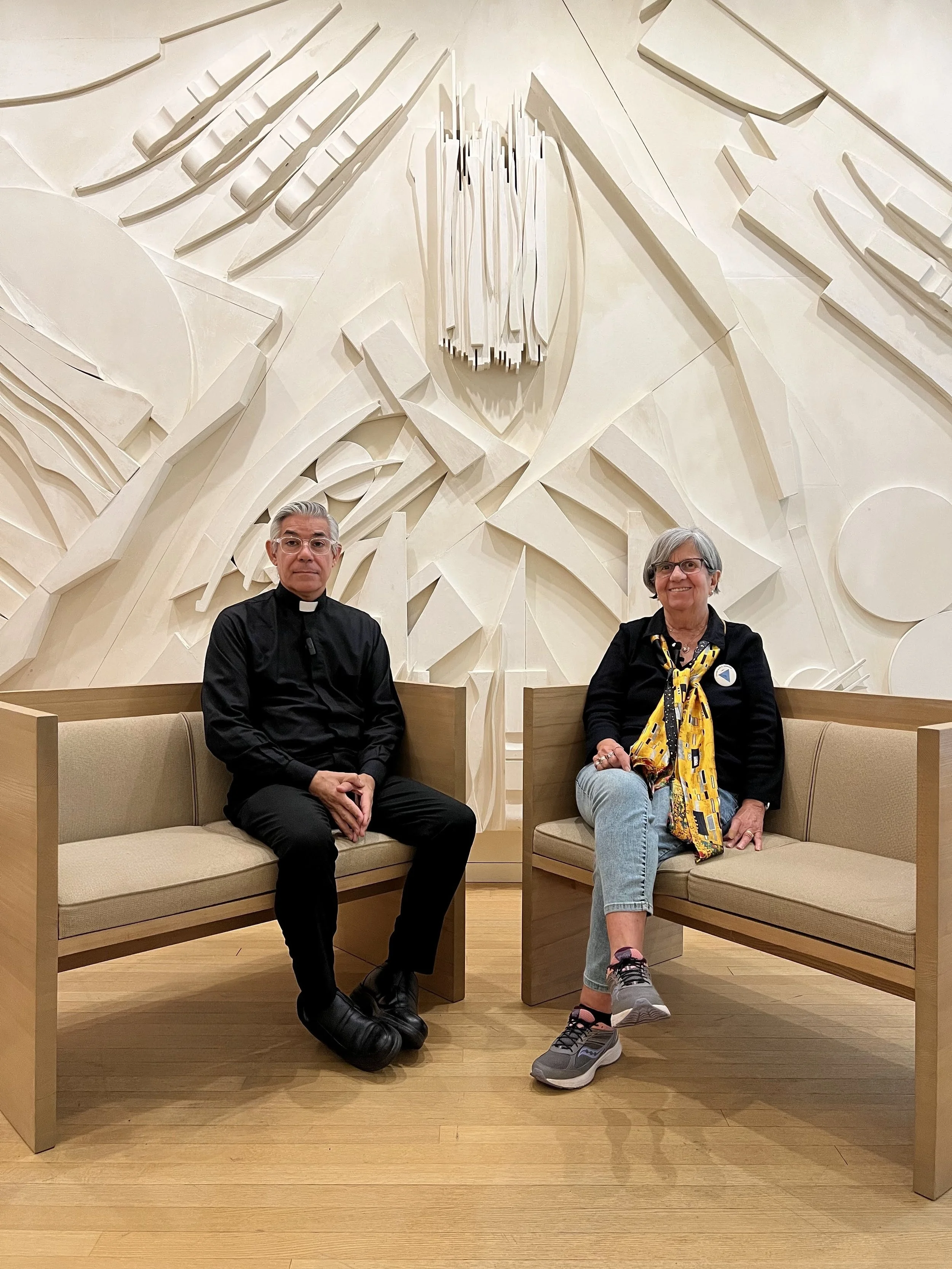
Pastor Gensel, Duke Ellington, 1968 (Chris Stam)
Dear people of Saint Peter’s,
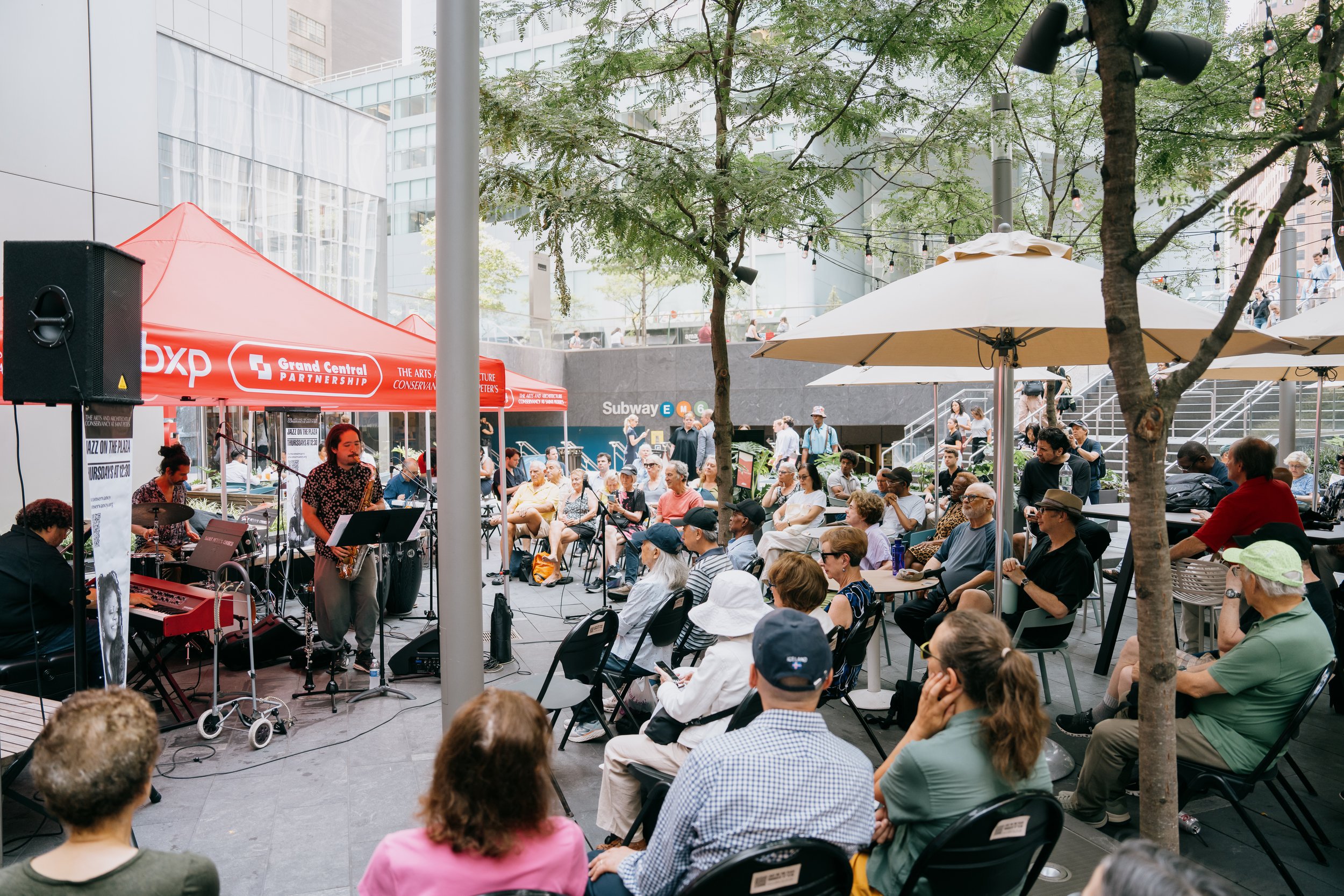
In Scripture, God often works through the smallest seeds, the most unexpected people, and overlooked places. In this way, we should not be surprised by the extraordinary life and enduring spirit, the strong vitality and ongoing growth of the Jazz Ministry.
It all began when Pastor John Garcia Gensel spent his free time in jazz clubs listening to musicians’ stories. Encouraged by Ruth Ellington, Jazz Vespers was first held in October 1965 at Gensel’s Upper West Side church. Weekly liturgies started when he moved here in May 1966.
Since then, Saint Peter’s has become a spiritual home for jazz musicians and fans across the lifespan. From Billy Strayhorn and John Coltrane to tributes this year for Sheila Jordan and Al Foster, Jazz Memorials are, in the words of George Wein, “celebrations of the lives of musicians ... where friends can not only say but play their respects.”
As we relaunch The Key, it is fitting this first issue — based on a historic design — marks this historic anniversary. Though for us, being The First Church of Jazz is more than history. It is who we are and a legacy we continue to honor, now and for the future. Sixty? This is just the beginning.
Jared R. Stahler
Senior Pastor
To commemorate the 2025 relaunch of the print version of The Key, an exhibition exploring editions spanning 1960 through 1977 is available through our Art+Culture Guide from Bloomberg Philanthropies.