
Regarded as “The First Church of Jazz,” Saint Peter’s Church remains a spiritual home for jazz, for jazz musicians and for lovers of jazz. Founded alongside Ruth and Duke Ellington, Billy Strayhorn, Joe Newman and Sheila Jordan, among many others, the community continues today with jazz greats from New York and around the world.
Jazz Vespers
At its beginning, Jazz Vespers was an entirely unique service. The Rev. John Garcia Gensel, who in the 1950s had started to cultivate a ground-breaking ministry with jazz musicians, believed jazz “is probably the best music for worship because it speaks to the existential situation of a human being. It is the personal expression of the person playing it.” In October of 1965, he and a number of jazz musicians experimented with a liturgy at Advent Lutheran Church where Ruth Ellington was then a member. After a series of attempts to hold additional liturgies elsewhere, Pastor Gensel and his Jazz Ministry moved to Saint Peter’s Church.
On May 15, 1966, The Ollie Shearer (vibes) Quartet led the first Jazz Vespers. Howard McGhee, who played trumpet with Charlie Parker, led on May 22. Joe Newman, former Count Basie trumpeter, led on May 29. Jazz Vespers has been held weekly at Saint Peter’s ever since.
Jazz Memorials
A year later, on May 31, 1967, Billy Strayhorn died of complications with esophageal cancer. Pastor Gensel was visiting him in the hospital and together with Billy’s partner, Bill Grove, and family and friends, they planned a public funeral at Saint Peter’s and a private ceremony to scatter his cremains in the Hudson River. Billy asked if he could give his Steinway grand piano to Saint Peter’s saying, “I think some musicians might get a kick out of playing it.” At the funeral, on June 5, 1967, Duke Ellington played an elegiac Lotus Blossom as a tribute. A few weeks later John Coltrane died. His funeral was held on July 21, 1967. Trumpeter Calvin “Cal” Massey read A Love Supreme. Also paying tribute was The Albert Ayler Quartet and The Ornette Coleman Quartet.
From this moment to today, Jazz Memorials have and continue to stand alongside Jazz Vespers as hallmarks of the Jazz Ministry. Remembering ancestors is as important within the jazz community as it is to the music itself. George Wein, founder of the Newport Jazz Festival, puts it this way: “New York, where so many musicians live and die, never had a great American tradition like the New Orleans Jazz Funeral. One man, John Garcia Gensel, changed that. He made jazz funerals at Saint Peter’s celebrations of the lives of musicians—with the dignity of a meaningful service, recognition of their achievements, and a place where friends can not only say but play their respects.”
All Nite Soul
New York City’s longest continuously running jazz festival, All Nite Soul, was launched in October 1970 to celebrate the fifth anniversary of Jazz Vespers. This twelve-hour marathon brought jazz musicians together to celebrate their community and their art form. Joe Newman, Eddie Bonnemere, Howard McGhee, Joe Carroll, Clark Terry, Alice Coltrane, Roy Haynes, Vera Auer, Ruth Brisbane, Sheila Jordan, Joe Klee, Paul Knoft, Arnie Lawrence, Stella Marrs, Harold Ousley and Billy Taylor were among those who played from dusk to dawn, until the grand finale: a soul food breakfast as the sun rose.
Over the next several decades this festival persisted. In the 2000s, All Nite Soul also came to include an annual award to honor a living legend of the Jazz Ministry— Gene Bertoncini, Barry Harris, Sheila Jordan, Billy Taylor, Clark Terry, Randy Weston and more.
The “New Saint Peter’s Church”
The 1970s presented an unparalleled opportunity for Saint Peter’s and the jazz community: a partnership with First National City Bank of New York to redevelop the entire city block between Lexington Avenue and 3rd Avenue, and 53rd Street and 54th Street. At the heart of CitiCorp center would be the new Saint Peter’s, built not as a private house of worship but as a public “tent of meeting” for people regardless their walk of life. Saint Peter’s built by “faith in the future of the city” at a time when neighborhoods were crumbling, and businesses and long-time residents were fleeing to the suburbs.
The “new Saint Peter’s Church,” provided expanded resources for the Jazz Ministry. A Duke Ellington Center was planned, including a rehearsal studio, teaching and performance space, a recording facility and more. The modernist sanctuary was designed with acoustics in mind (no one can hear the E train or 6 trains rumbling below) as well as flexibility for the jazz programming that had developed to date and still more to follow. The dedication of Saint Peter’s Church in December 1977 included then Mayor-Elect Ed Koch, representatives of the church and the bank, the design and construction teams and jazz luminaries. A special edition of All Nite Soul drew a line that wrapped around the city block.
Growth in a new home
Already a home for Jazz musicians in New York City, the “new Saint Peter’s Church” fostered still more innovative programming. Edmund Anderson, a close friend and collaborator of Duke Ellington, retired from his professional career and became the first Executive Director of The Common, a non-religious not-for-profit organization through which the church and the bank offered cultural programming. Anderson produced a weekly jazz series called Midday Jazz Midtown, presenting yet another opportunity to hear some of the City’s best musicians. When Anderson retired, Ronny Whyte (d. 2025) succeeded him and continued the series until the outbreak of COVID-19. The program will return once a month in the Fall of 2026.
When Pastor Gensel retired in the 1990s, Pastor Dale R. Lind was chosen to succeed him as Jazz Pastor. A close friend of Pastor Gensel’s and an owner of several bars / performing venues in Greenwich Village, and given his special status as a “worker-priest,” the Jazz Ministry did not miss a beat in the transition. Almost immediately, Pastor Lind collaborated with Cobi Narita to launch International Women in Jazz; the first organization of its kind. Beloved in his own right, Pastor Lind served as and continues in his own retirement to be a living bridge across all sixty years of the Jazz Ministry. In a variety of ways, he has been associated with Saint Peter’s since 1964. From the mid-2000s and into the 2020s, Pastor Lind was a mentor to Ike Sturm. A bassist and prolific composer, Ike served as Director of Music for Jazz. Among his innovations was a Jazz4All program which brought musicians of all skill levels into regular contact with some of the most well-known names in jazz for education and formation.
Jazz on the Plaza
Having thoroughly booked every available space within Saint Peter’s, the Jazz Ministry moved outside in the early 2000s. In partnership with BXP, Grand Central Partnership and Saint Peter’s Church, Jazz on the Plaza launched and quickly became New York City’s favorite community-based outdoor public jazz concert series. Stretching nearly an entire city block—nestled in the public square just outside of Saint Peter’s—this space has brought office-workers, tourists, residents and the general public into contact with a wide breadth of jazz musicians, from Jon Batiste to Marcus Gilmore, Catherine Russell to Billy Hart. Post-pandemic the series continues to help bring vitality back to Midtown. In 2025 a Jazz on the Plaza: Back to School Edition was launched, bringing another generation of jazz musicians into the jazz community at Saint Peter’s, which began decades ago only as a “Nite Flock.”
For the Future
Plans for rebuilding the flood-devastated Saint Peter’s envision a future where the jazz community continues to be at home. As the strain on arts funding continues, though different in details not unlike the years the Jazz Ministry was founded, Saint Peter’s is intentionally reaching out and inviting people in. In addition to the rich programmatic offerings, the rehearsal and performance resources, spiritual care and connection to community offered at Saint Peter’s, the church intends to activate its vast and unique jazz archive. From recordings to personal writings, from 60+ years of programs to an array of unique ephemera, from pastoral material to notes for efforts like Duke Ellington’s Sacred Concerts the intent, in addition to being mined by musicians and New York’s jazz community members, is that scholars, pastors, musicians, civic leaders, jazz producers and more will both probe the holdings and give fresh expression to what is found within.
While Saint Peter’s multi-layered and inter-connected Jazz Ministry enjoys 60 years of strength, it is also fragile. Witnessing that everywhere where budgets are tight, it is the arts that are so often overlooked—no less jazz—Saint Peter’s seeks to look outward: to inspire and to mentor other houses-of-worship-based and jazz-community-led jazz programs. Deeply embedded within communities across the country, this ecosystem is crucial to supporting local musicians as well as bringing varieties of people together for a common purpose. From these houses of worship come communities that offer mutual care, networks that respond to crisis and relationships that bridge any and all divides. Saint Peter’s is actively seeking to identify key individuals, foundations and organizations who can help create a lasting legacy ensuring the next 60 years thrive just as much as the first 60 years.
Since the very beginning, the focus has been jazz: “its rhythms, its moods, its sounds–but most importantly its people” (SPC Archive). Saint Peter’s remains committed to being precisely where it has been for six decades: within and responsive to the lives of jazz musicians by affirming their gifts, embracing their musical-spiritual/spiritual-musical language and accompanying them in their effort to lift up humanity amidst contemporary demands.
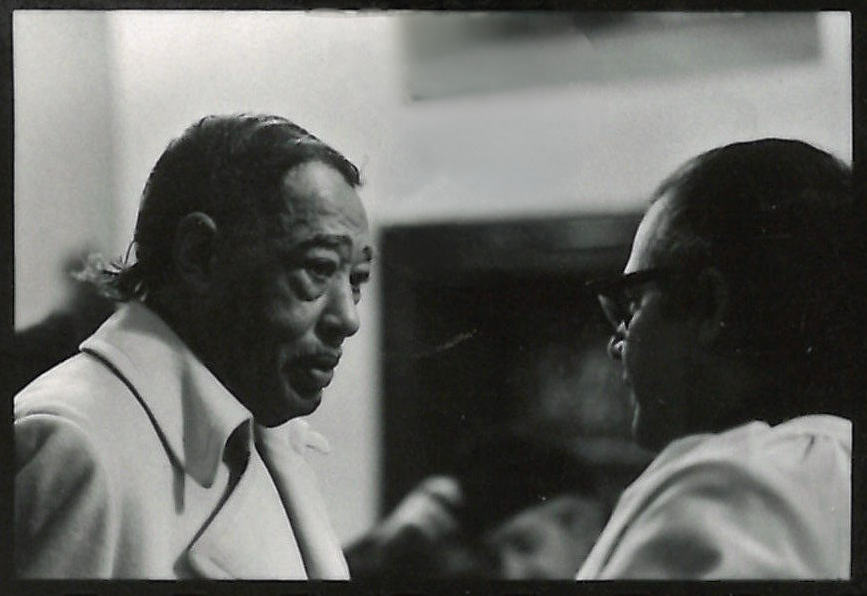
Pastor Gensel, Duke Ellington, 1971 (Brad Hess)
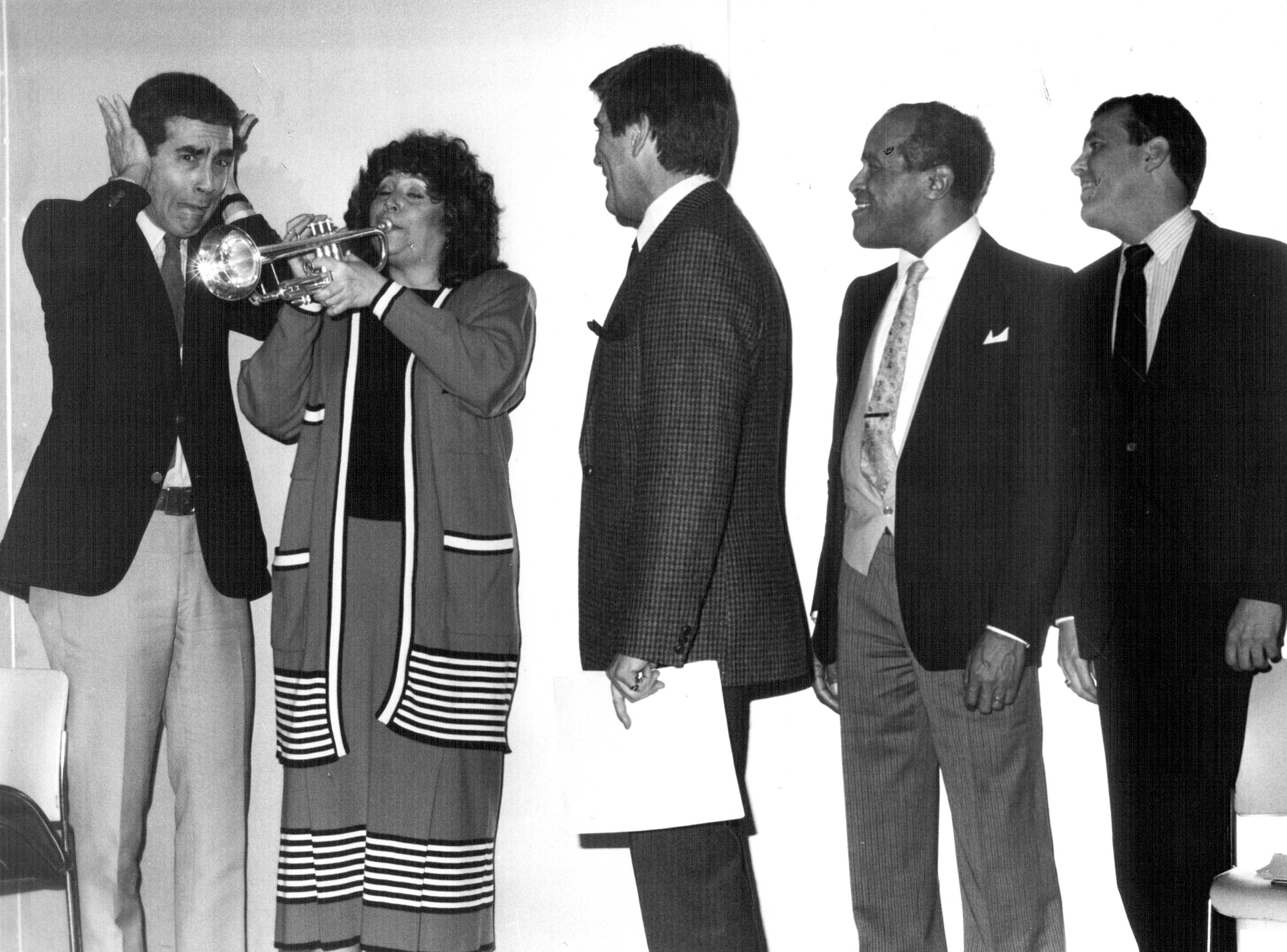
Ronny Whyte, Jon Hendricks, Wes McAfee, Dick Sudhalter, Daryl Sherman (Courtesy, Daryl Sherman)
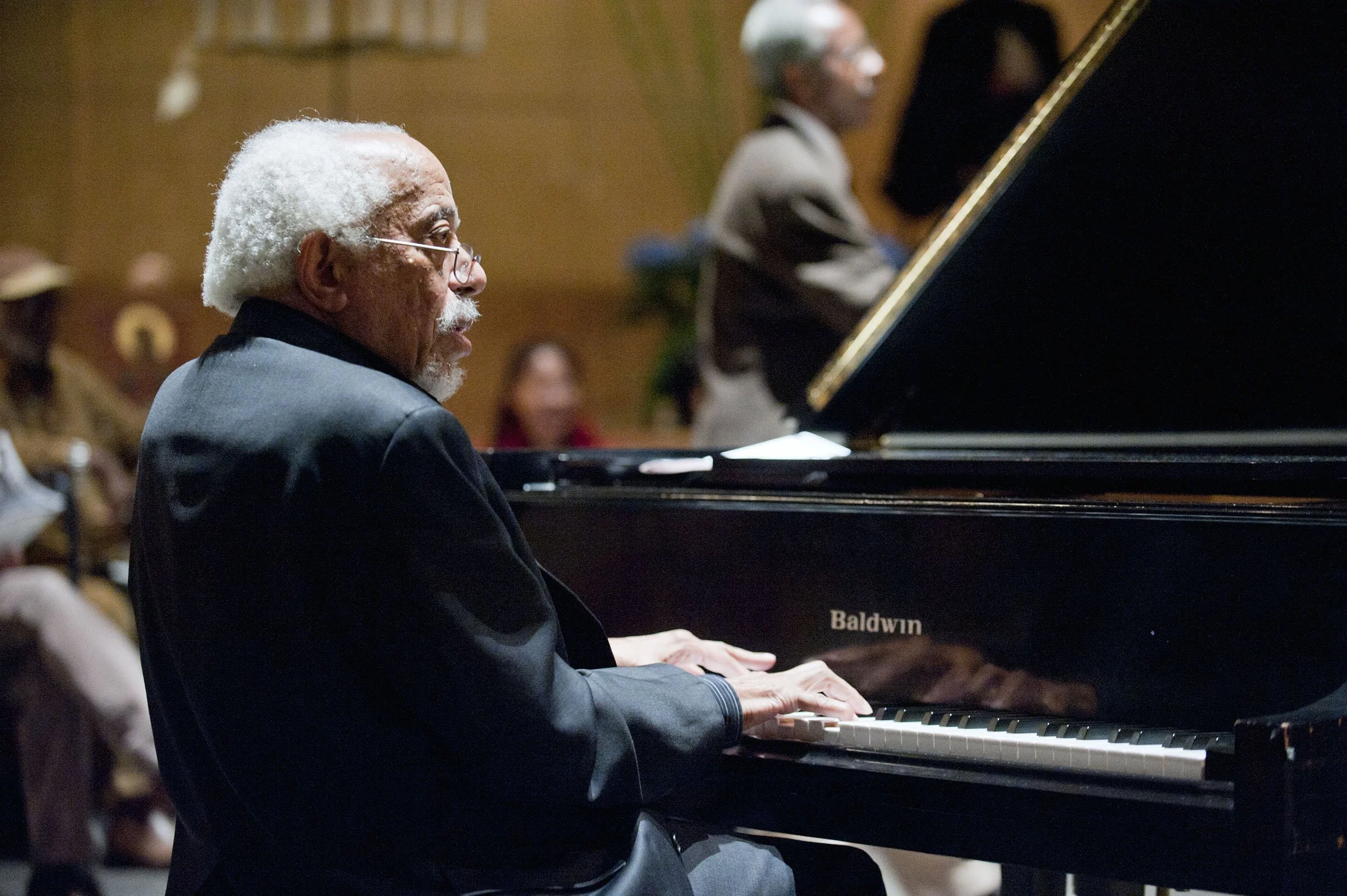
Barry Harris, 2012 (Ed Berger)
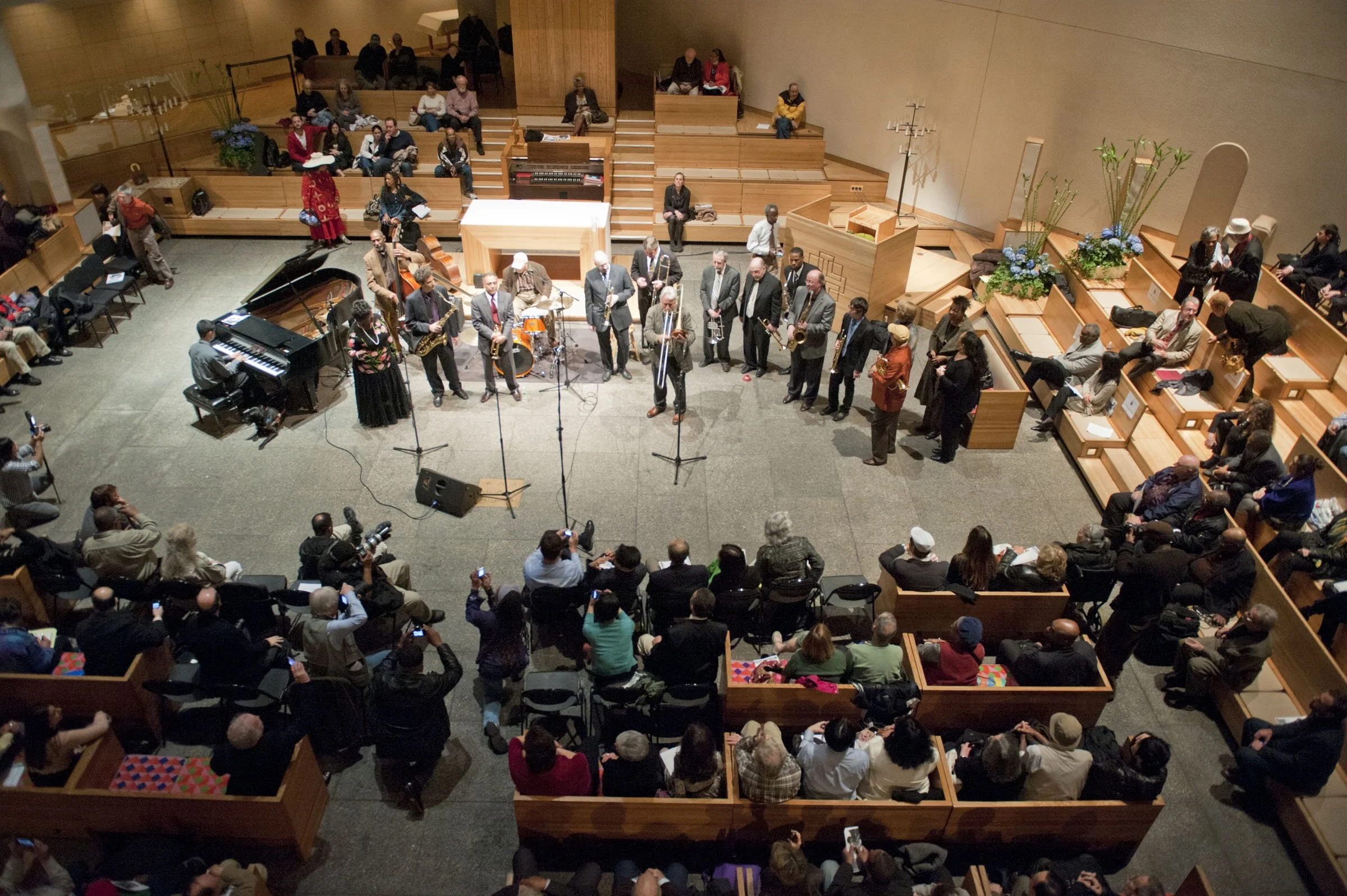
Ensemble at Terry Clark Benefit, 2012 (Ed Berger)
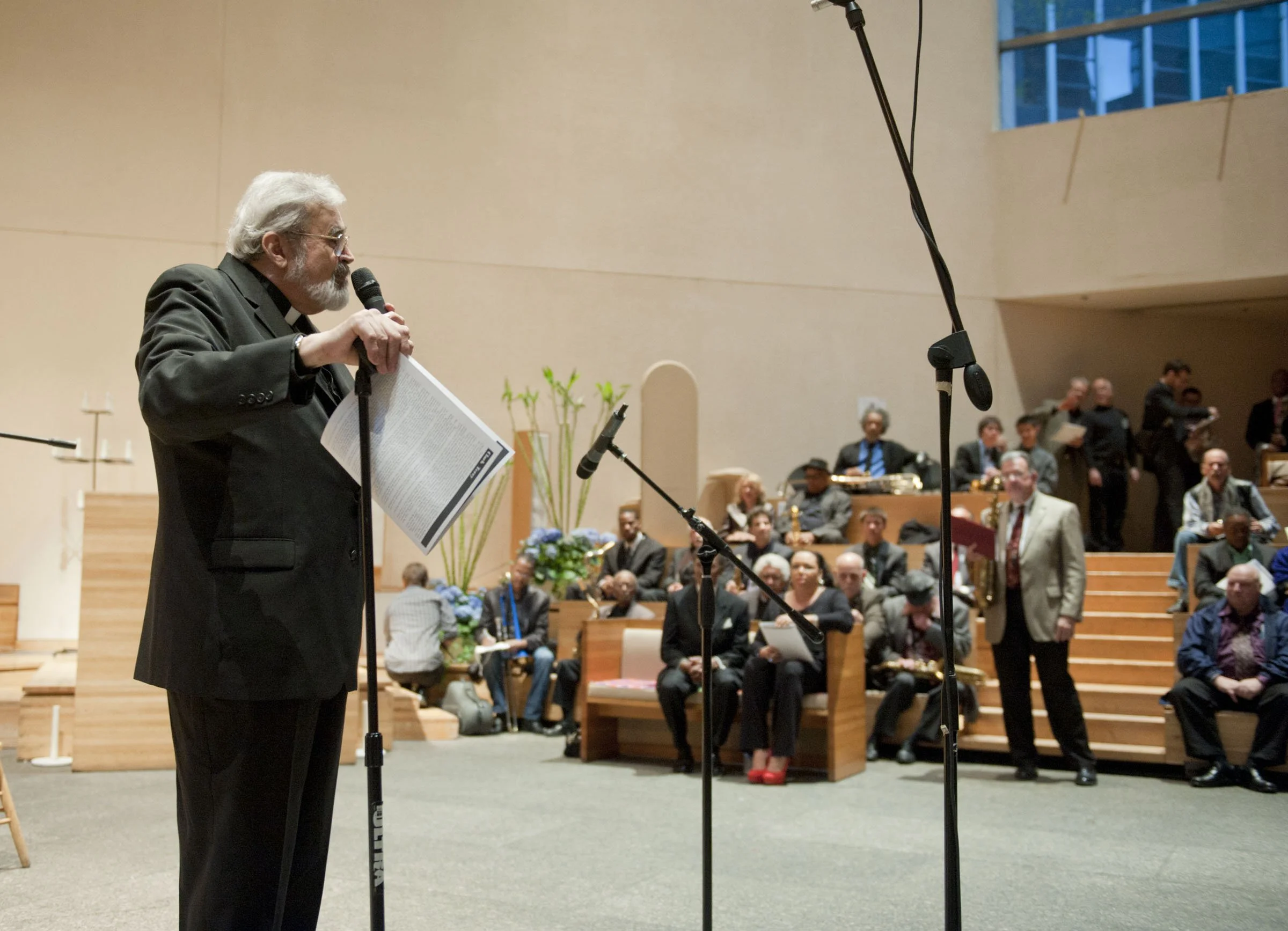
Pastor Lind, 2012 (Ed Berger)
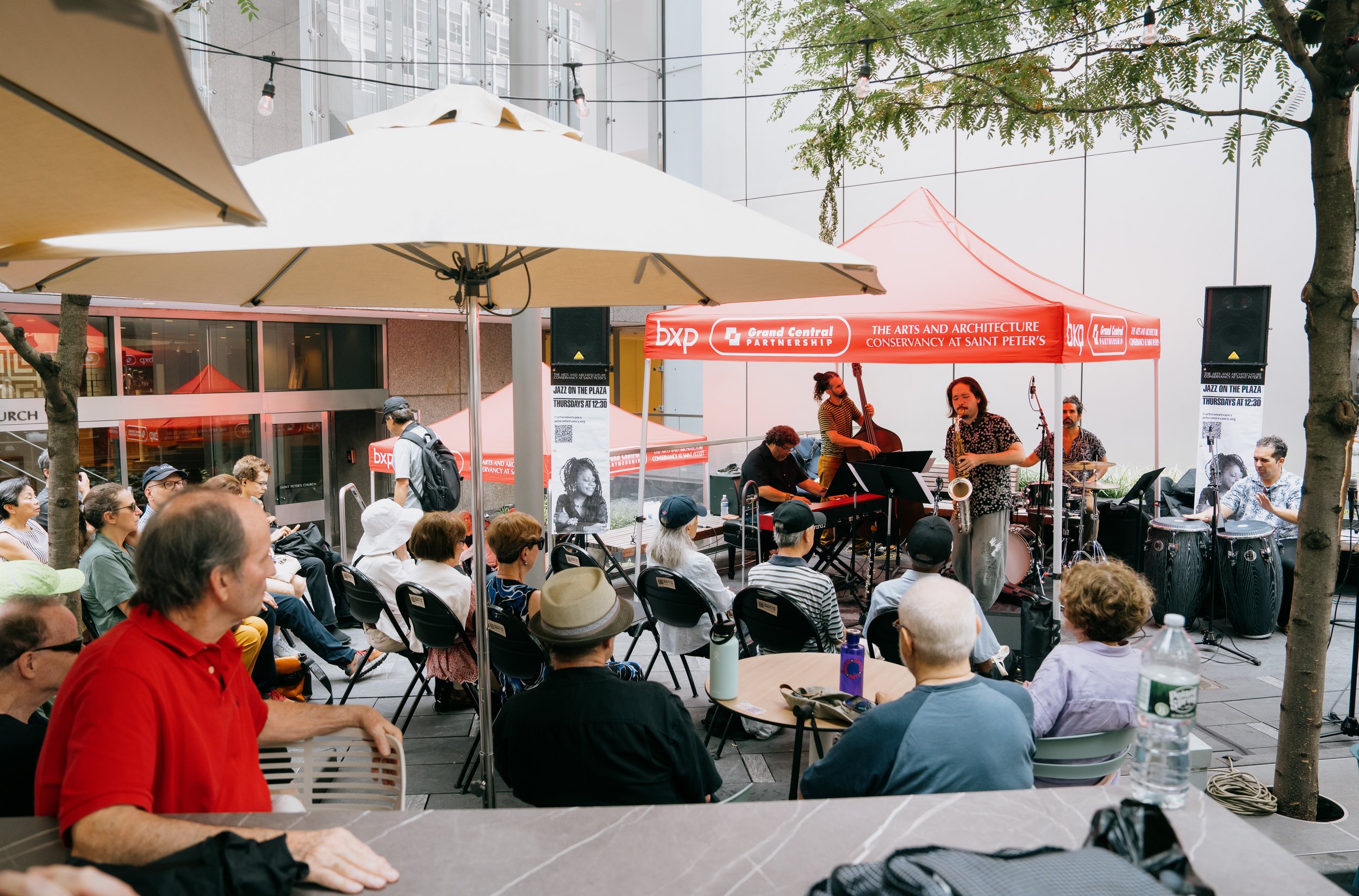
Jazz on the Plaza, 2025 (Brian Hatton)
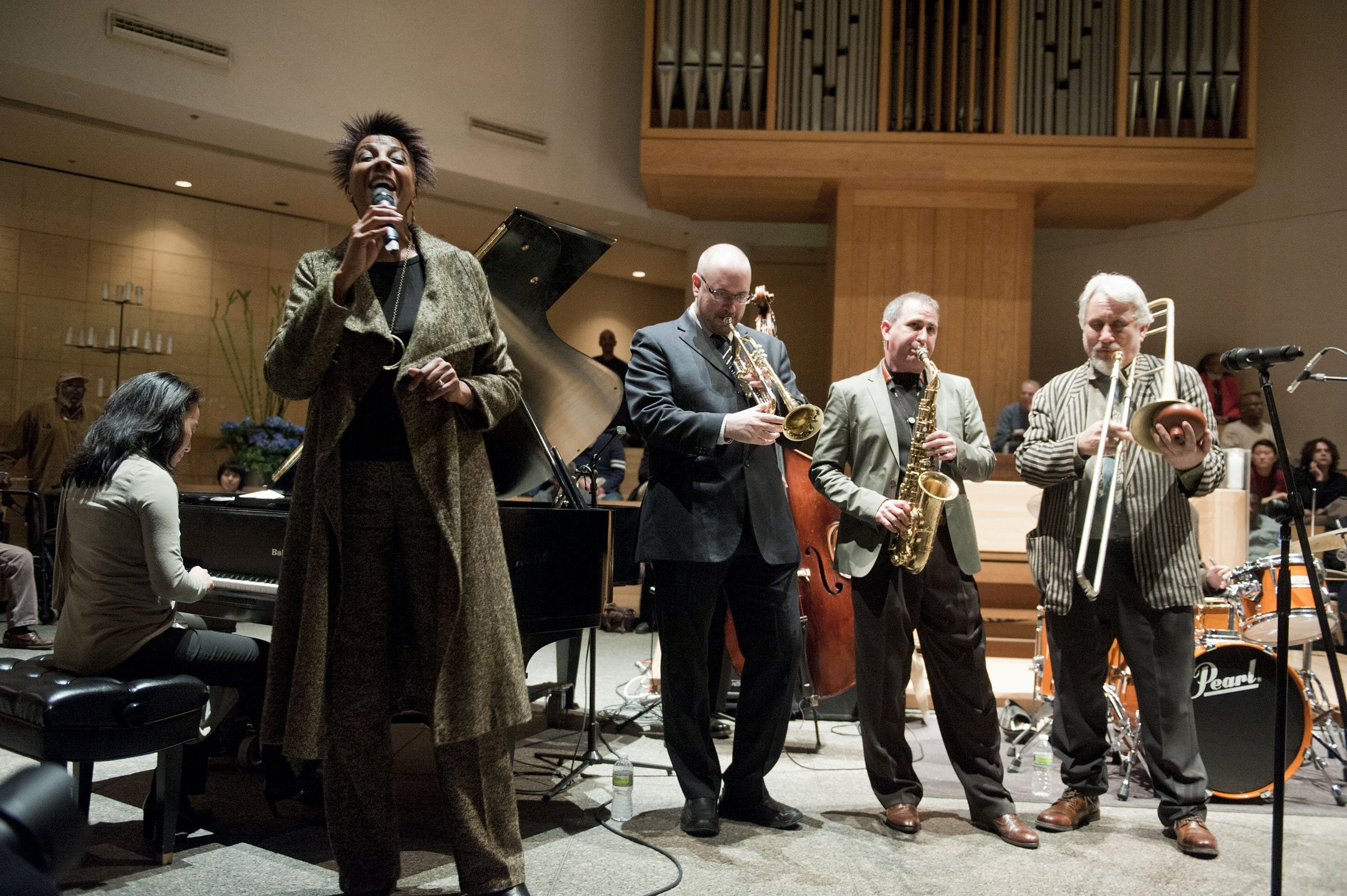
Ensemble at Terry Clark Benefit, 2012 (Ed Berger)

Jazz Vespers Michael Howell, Andrea Wolpfler, Ken Filiano (SPC Archive)
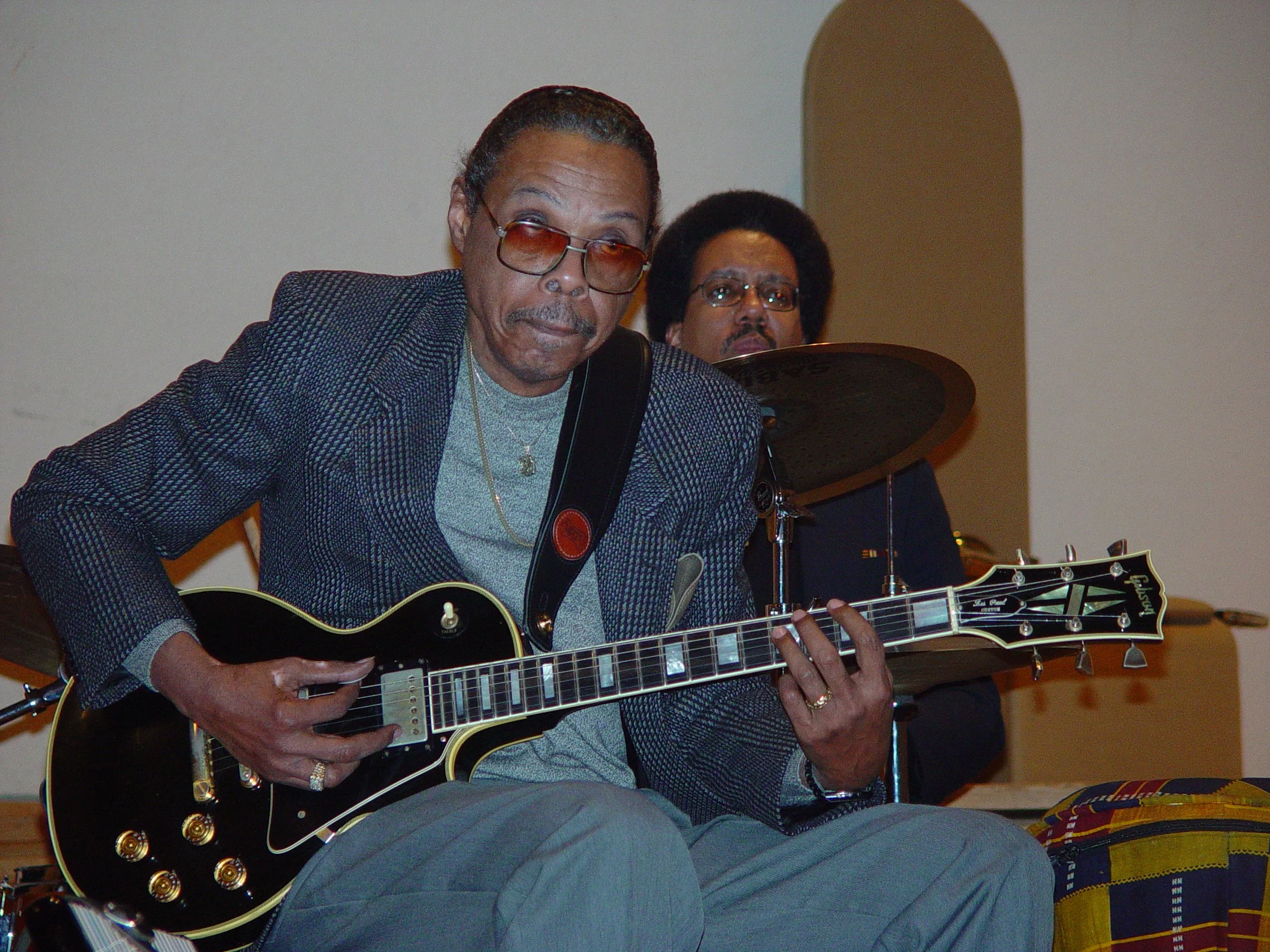
Cornell Dupree, 2003 (Jim Cummins)